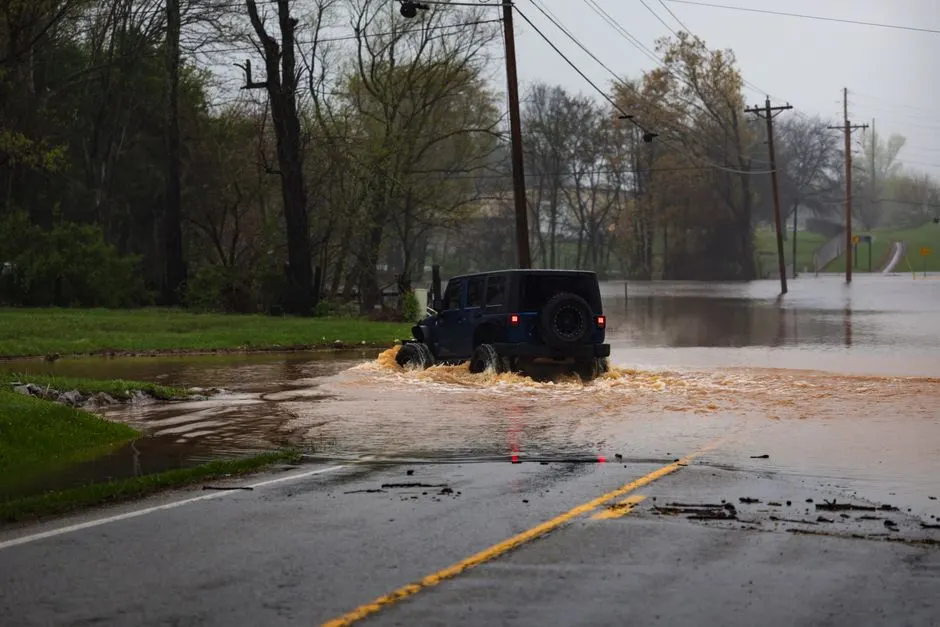
Preparing your Universal City home for hurricane season flooding means three things: clearing the paths water takes away from your house, sealing the openings it takes into your house, and knowing exactly who to call when both fail. In Universal City, the season runs July through October, and the storms that matter most are the slow tropical systems that drop 3 to 6 inches in a single night. This post walks through the checklist we hand to homeowners before the first storm train arrives, plus the mistakes that turn a wet garage into a $18,000 rebuild.
We have worked storm seasons across this area long enough to know that most flood damage here is not from a river jumping its bank. It is from a blocked storm drain, a failed sump pump, or a roof-to-wall seam that has been quietly leaking since spring. Fix those three things and you have eliminated most of your risk. Preparing your Universal City home for hurricane season flooding in California is really a maintenance job, not a sandbag job.
When hurricane season flooding is a real risk in Universal City
Hurricane season flooding in Universal City is a risk from July 1 through October 31, with the highest probability of a major rain event in August and September. The National Weather Service puts the peak of the Eastern Pacific and Gulf moisture push in late August, which is when we see the most calls. If you have lived here more than a few years, you already know the pattern: a hot, still week, then a tropical system stalls over the hill country and dumps rain for 18 hours.
Universal City sits in a bowl. Water that falls on the ridges above us has to go somewhere, and it goes down. That is why a storm that drops 2 inches in an hour can put 6 inches of water against your foundation. The ground here is a mix of clay and limestone, which means it absorbs slowly and then releases fast. Your yard can look dry at 9 p.m. and have a river running through it by 11 p.m.
The other factor is the age of the housing stock. A lot of Universal City homes were built between 1975 and 1995, and the original drainage was designed for a 25-year storm. We get 100-year storms now every few seasons. If your home still has the original 4-inch downspouts and a single sump pit, you are underbuilt for what is coming.
How do I prepare my Universal City home for hurricane season flooding?
You prepare by treating water like an unwelcome guest: give it a clear path out, lock the doors it uses to get in, and keep a number on the fridge for when it gets past you anyway. The work splits into three buckets - yard and drainage, house envelope, and emergency readiness. Most homeowners can handle the first two in a weekend. The third is a phone call.
Start with the yard. Walk your property line and find every place water leaves your lot. If you cannot find one, that is your first problem. A typical Universal City lot needs at least two discharge points, and they should be 15 to 20 feet from the foundation. If your downspouts dump within 3 feet of the slab, you are watering your own foundation every time it rains.
Next, look at the house envelope. Water gets in through roof penetrations, window and door frames, foundation vents, and the garage door seal. We see more water come through a failed garage door bottom seal than through any window. A $40 seal replacement beats a $6,000 garage floor replacement every time.
Finally, get your emergency plan in writing. Know where your shutoff valve is, know how to kill power to the lower level, and have the number of a water damage mitigation in Universal City, California crew saved in your phone before you need it. In a real storm, the difference between a dry house and a flooded one is often 20 minutes of response time.
The flood preparation checklist for Universal City homeowners
This is the flood preparation checklist for Universal City homeowners we run through every spring, and again in late June before the first storms. It takes about four hours and costs under $300 if you do it yourself.
- Clear every storm drain and French drain on your property. Leaves, mulch, and lawn clippings are the number one cause of local street flooding. If the drain at the end of your driveway is blocked, the city will not clear it until after the storm.
- Test your sump pump with a bucket of water. It should move 30 to 40 gallons per minute and shut off cleanly. If it runs for more than 10 seconds after the water stops, the float is sticking.
- Extend downspouts 15 feet from the foundation. Use solid corrugated pipe, not the black flexible stuff that crushes under a lawn mower.
- Check your roof for lifted shingles and cracked pipe boots. A 1-inch crack around a vent pipe can leak 5 gallons in a 30-minute downpour.
- Seal the garage door bottom and any foundation vents below grade. Use closed-cell foam or a rubber threshold, not spray foam alone.
- Photograph every room and your mechanical systems. Insurance adjusters want pre-storm condition photos, and your phone is the fastest way to get them.
- Build a 72-hour supply kit. Two gallons of water per person per day, a battery radio, flashlights, a first aid kit, and any prescription medication.
- Move valuables and electronics off the floor. In a finished basement, that means everything above 24 inches.
If you do nothing else, do items one and two. Those two fixes prevent more water damage in this area than everything else on the list combined.
Where water gets into Universal City homes
Water gets into Universal City homes through five predictable paths, and we can usually guess which one failed before we even pull into the driveway. The first is the foundation wall. Hydrostatic pressure from saturated clay pushes water through hairline cracks and the cove joint where the wall meets the floor. You will see it as a dark line on the baseboard or a white chalky stain on the concrete.
The second is the roof-to-wall intersection. This is where a ceiling water damage repair in Universal City, California call usually starts. A small leak at the flashing runs down the inside of the wall cavity and shows up as a brown ring on the ceiling 10 feet away. By the time you see the stain, the insulation is already wet.
The third is the sewer line. When the city storm system surcharges, water can back up through your floor drains and toilets. That is a sewage cleanup in Universal City, California job, not a mop job, because the water is contaminated. The fourth is the window and door frames, especially on the windward side of the house. The fifth is the garage, which is almost always the first place to flood because it sits lowest and has the weakest seal.
We see this pattern most in the older neighborhoods off Water Damage Restoration in Pat Booker Road, where the original slab-on-grade construction has had 40 years of soil movement. The cracks are not structural, but they are perfect water channels. If your home is in that area, a $600 crack injection before storm season is money well spent.
What should I do before hurricane season flooding in Universal City California?
Before hurricane season flooding in Universal City California, you should complete your drainage work by June 15, confirm your insurance coverage in writing by June 30, and pre-qualify a restoration crew by July 1. That gives you a two-week buffer before the first tropical moisture usually arrives.
Insurance is the part most homeowners get wrong. Standard homeowners policies in California do not cover flood damage from rising water. You need a separate NFIP policy or a private flood policy, and there is a 30-day waiting period before it takes effect. If you buy flood insurance on July 1, you are not covered until July 31. That is why we tell people to buy it in May.
Also check your deductible and your coverage limits for basement contents. A typical NFIP policy covers $250,000 for the structure and $100,000 for contents, but a finished basement with a home theater and gym can blow past that fast. Take the photos, itemize the electronics, and store the list in the cloud.
Pre-qualifying a restoration crew means calling before you need them. Ask two questions: how fast can you get water extraction equipment on site, and do you handle the insurance paperwork directly? A crew that can be at your door in under an hour with truck-mounted extraction units will save you thousands in secondary damage. If you want to see what that response looks like, our emergency water removal in Universal City, California page lays out the equipment we bring.
Common mistakes we see every storm season
The most common mistake is waiting for the storm to pass before calling anyone. Water damage compounds. A wet carpet pad starts growing mold in 24 to 48 hours, and a wet wall cavity can grow mold in 72 hours. By the time the sun comes out, you have a mold problem on top of a water problem.
The second mistake is using a shop vac and a box fan. A shop vac pulls up surface water but leaves the subfloor saturated. A box fan moves air but does not lower the moisture content of the framing. You need commercial dehumidifiers and air movers running for 3 to 5 days to dry a wall cavity properly. We see homeowners spend $400 on rental equipment and still end up with a mold remediation bill because they stopped too early.
The third mistake is ignoring the garage and crawl space. Water sitting in a crawl space wicks up into the floor above and creates a musty smell that never goes away. If you have a crawl space, check it after every major rain. A crawl space mold removal in Universal City, California job costs far more than a dehumidifier and a vapor barrier.
The fourth mistake is not documenting the damage before you clean up. Take photos of the water line on the wall, the wet furniture, and the ruined flooring before you move anything. Adjusters work from photos, and a missing photo is a denied claim.
When to call a professional
Call a professional when the water is more than 1 inch deep, when it has been standing for more than 12 hours, or when it came in through a drain or toilet. Those three conditions mean you are dealing with contaminated water, structural saturation, or both, and a mop and fan will not fix it.
We handle the whole job: we extract the water, remove the damaged materials, dry the structure with commercial equipment, and treat for mold. We also work directly with your insurance adjuster so you are not stuck playing middleman. If you are not sure whether your situation is a DIY job or a call, describe it to us and we will tell you straight.
Water Damage Restoration Universal City is a local crew, not a franchise call center. When you call, you talk to someone who knows the streets here and has dried out homes on them. That matters when a storm is moving through and you need someone at your door in 45 minutes, not 4 hours.
Frequently Asked Questions
How do I prepare my Universal City home for hurricane season flooding?
Clear your storm drains and French drains by June 15, test your sump pump, extend downspouts 15 feet from the foundation, and seal your garage door bottom. Those four steps prevent most flood damage in this area. Then buy flood insurance in May so the 30-day waiting period ends before the season peaks.
What should I do before hurricane season flooding in Universal City California?
Finish your drainage work by mid-June, confirm your flood policy in writing by June 30, and pre-qualify a restoration crew by July 1. Photograph every room and mechanical system. Build a 72-hour supply kit. The season runs July through October, so you want everything done before the first tropical moisture arrives.
How can I protect my Universal City home from flood damage?
Protect it by moving water away from the foundation and sealing the openings water uses to get in. Extend downspouts 15 feet, clear every drain, seal foundation cracks with injection resin, and install a backflow valve on your sewer line. A backflow valve costs $800 to $1,500 and stops the worst kind of flood - the one from your own drain.
When is hurricane season flooding a risk in Universal City California?
The risk runs July 1 through October 31, with the highest probability in August and September. Universal City sits in a bowl, so a storm that drops 2 inches in an hour can put 6 inches of water against your foundation. The ground is clay and limestone, which absorbs slowly and releases fast.
Does homeowners insurance cover hurricane season flooding in Universal City?
Standard homeowners insurance does not cover rising-water flood damage in California. You need a separate NFIP policy or a private flood policy, and there is a 30-day waiting period. Typical NFIP coverage is $250,000 for the structure and $100,000 for contents. Buy it in May, not July.
Get help with Water Damage Restoration in Universal City
If a storm has already put water in your home, do not wait for it to dry on its own. Call Water Damage Restoration Universal City at (833) 321-7153 and we will have extraction equipment at your door, usually within the hour.
We handle the water, the drying, the mold treatment, and the insurance paperwork. You handle getting your family somewhere safe. That is the deal.